Researching and writing about puritan poet Anne Bradstreet
Showing posts with label Anne Bradstreet. Show all posts

Wednesday, January 30, 2013

Obnoxious (adj.)

Go ahead, Anne, choose the words that
will screw up my big plans.


"I am obnoxious to each carping tongue
Who says my hand a needle better fits . . . "

Wonderful!  Can't you see Anne Bradstreet at her writing table, slyly taking revenge on her nitty neighbors who all think she should be cooking and canning rather than composing poetry?  It's perfect for us, too, four hundred years removed from Anne's world.  It gives us a heady dose of her spirit.  We get a glimpse of the subtle rebellion that is (apparently) simmering away under her staid garb of a magistrate's wife.

Except . . .

Curse you, Oxford English Dictionary.

The OED is a multi-volume dictionary that contains -- not only (purportedly) every word in the language -- but how each word has been used over time.  So if (for instance) one wanted to find out what the word, "obnoxious" meant in the early seventeenth century, this would be one's first stop.  It's a wonderful tool for historical writers.

Except when it screws up my plans.

Definition 1; "Exposed to (actual or possible) harm; subject or liable to injury or evil of any kind."
Definition 1a:  "With to: Liable, subject, exposed, open . . . "

"Formerly the prevailing use," intones the OED, "now less frequent than 6."

Definition #6 (almost a column later) is our more familiar usage of the word:  "object of aversion or dislike; offensive, objectionable, odious . . . " Used as early as 1675, to be sure.  But philologically, a mistake:  a mixing-up of "obnoxious" with "noxious."

So if I bite the bullet and assume she was using the word as it was usually used in her time -- that makes it:
"I am wounded by each carping tongue"
"I am injured by each carping tongue"
"I am left open to criticism by each carping tongue"

Or some such.

Sure, still pretty good, still workable, still spirited but different than what I thought . . . and frankly (since the discovery is still in its first hour), a bummer.


Friday, September 14, 2012

Writing Pains #3

In making window glass in the 17th century,
you'd get a "bull's eye" in your glass sheets,
which would be used for  your less prominent
windows.  Nicer windows were only slightly wavy.
Thanks to b3tarev3 for this photo.
Yesterday I went to a writers' group in Winnetka, about half an hour away.  The first hour was devoted to a presentation by an author on incorporating memory into stories, and the second a reading of a manuscript from one of the group's members.  And a fine manuscript it was!  I didn't go crawling out vowing to forsake my inferior writing, but it showed me that I have a long way to go yet.  Well, never mind; at least I'm voyaging, and I've not been at this for very long yet.

In the meantime, I'm making sure I've got Stuart England firmly in my own head before I take Anne across the ocean.  To that end I have learned this about nobleman's houses in the early 17th century:

Carpets went on tables as well as floors.  You'd cover the carpet with a tablecloth if the table was to be used for eating.

In the best rooms, walls were paneled.  Ceilings were often painted.

You would share a goblet or cup at a meal with the person you were seated next to.  After you drank, the cup was wiped out with a cloth and your companion drank.

Women as a whole experienced a lessening of status after Queen Elizabeth died.

Window glass is a very difficult subject to find out anything about.

And here's a sampling of questions that I have:

What happens to that fancy carpet on the table if you spill the wine?  I'm dubious about the carpet on the table during mealtimes thing; it sounds to me like an historian somewhere along the line got a little crazy with his conclusions.  Wouldn't you protect your expensive, irreplaceable carpet by removing it during the meal?  How easily would a stemmed goblet balance on all that fabric?  Still, if the tablecloth covering it were a fine wool, or silk, I suppose that would provide more protection than a cotton one.  Still.

If a married man was seated next to a single woman, would they share a cup?  Doesn't sound right.

Who was the head housekeeper?  Was it a chick or a dude?  What were the expected duties of a steward's wife?

How could you have a house without hallways?  Because they didn't; they had common rooms (like a parlor or a dining room), and then you'd enter private rooms directly from there.  The hallway less than a century away, I think, but  in 1630, except for a long "gallery" on one side or on  the back of the house, they didn't exist.  And it is most inconvenient for this writer to visualize what the top of the stairs looked like, and how you'd get to that room under the eaves on the far side of the house.

Wednesday, August 22, 2012

Poetry for Dummies

Bad news, folks . . . writing poetry is more than rhyming emotion-laden words in meter.  Worse news:  17th-century poetry was a craft as much as an art, and I think I probably should learn a lot of the under-the-hood stuff if I’m going to understand Ole Annie, my poet buddy whose life I’m trying to recreate.

I’ve had some helps in this department -- a couple of books, good ones:  Puritan Poets and Poetics, and Sinful Self, Saintly Self:  the Puritan Experience of Poetry.  They have further directed me to a 16-the century book,The Art of English Poesie, which is a great window into the craft of poetry writing.  But . . . sigh.  Constructing a poem is like building a cathedral; it has rules and conventions and its own terminology as well.  And I should know something about all that so I can understand what the heck she was attempting when she sat down to write.  So I have to learn it.  Some of it.  Enough to get along; the poetic equivalent of “Ou est la salle de bain?” for the American in France.  Well, more than that, I guess.

And when I finish that, maybe I can go back to learning about 17th-century ships, a task I happily set aside last spring.  Humph.

I can’t even figure out what a “foot” is.  It’s a poetic term, and it’s related to syllables, but it’s not syllables.  Mr. Poesie Art didn’t make it clear, and I haven’t consulted Dr. Google yet.

But I am learning.  Learning, learning, learning, getting comfy inside Anne Bradstreet’s mental world, and painting it out again in a story that is now at about 30,000 words.


Saturday, April 28, 2012

Sailing, Sailing O’er the Ocean Blue . . .

In any century, tall ships take one’s breath away.
I’m stuck learning stuff I really don’t want to have to learn (a sensation that my students are no doubt familiar with) now that Anne is leaving England via watercraft.  There’s a great lore around tall ships and a very picky vocabulary, and there’s nothing for it but to master at least the rudiments.  Sigh.

So for instance, if Anne is leaning over the railing looking at the water -- what’s that railing called?  That’s not the gunwale, is it?  I think “gunwale” would apply to the upper lip of a smaller craft.  I asked Dr. Google, who helpfully supplied me with many diagrams of ships, the different parts labelled, but none had the name of the railing thing.

It’s hard to track down the details that I need to know.  For instance, how do you get on a ship, in the 17th century?  A gangway, Love Boat-style?  Or do the passengers have to mount some sort of ladder affair?  I decided it had to be a gangway, and with as little description as possible (the less to err) I put one in.  I spent a couple of hours yesterday trawling the internet trying to track down the answer to that question, and I’ve got a couple of book titles to check as well, if I feel highly inspired down the road to figure it out.

And what about the sleeping arrangements?  The replica of the Mayflower has bunks for its passengers, but if that was so, I sure hope they had seat belts for those things.  Can you imagine being in a bunk when a storm hit?  A storm at sea was like a roller coaster.  British sailors were killed by being thrown out of their bunks until the British Navy switched to hammocks around 1600.  These were the deep hammocks, so you’re in a sort of cocoon when you’re inside them.  Even if the ship is pitching, you’re still secure, since the hammock would sway with the motion and the occupant would remain balanced.

My puritans had to be in hammocks.  Hammocks were safer and cheaper than bunks.  One of the chief drawbacks would be that you’d sleep cold in a hammock, and it was cold out at sea.  (If you’ve ever camped in cold weather and foolishly slept on an air mattress -- you know what a hammock on the ocean would be like.)  But you’d have some sort of padding in the bottom of your hammock (probably a straw-filled mattress) to help with that.

I was pleased to learn that the Arbella, Anne’s ship, was a large ship, stately even, with a cargo hold twice the size of the Mayflower’s.  She had an eagle on her prow and three masts.  Most of the people were housed belowdecks, on a middle deck that was above the hold.  Likely Anne was not there, though.  Some makeshift cabins were constructed on the main deck for the ladies of high rank.  Surely one of those ladies was Arbella Fiennes Clinton Johnson, daughter and sister of earls and wife of one of the most prominent colonists -- and for whom the boat was named.  Arbella’s family owned Sempringham, the manor where Anne spent so many years of her girlhood.  I would imagine that a few ladies housed with Arbella to wait on her (they brought England with them, at least at first).  The logical choices for that role would be Anne and her mother. I think men and women slept separately on this trip -- even married couples -- though I’m not sure.

The problem with these cabins was that if the Arbella’s guns had to be fired -- and she was bristling with weapons -- the cabins would have to be taken down or else they would be in the way of the gun sights.  (So these were cannons on the main deck, I suppose).  And that did happen, in the early days of the voyage.  Some of the women’s stuff was tossed in the sea so it would not be ignited by any flaming arrows that the enemy might send over.  Maybe the gentlewomen might have been better off living belowdecks; at least they would not have lost some of their blankets into the English Channel.


Wednesday, April 18, 2012

Time For a Poetry Break


Happy Poetry Month, everybody!  I only just realized today, April 18, that that is indeed what it is.  I suppose that a historian writing about a poet should keep up on these things.  But it’s because I’m a historian, You See, and not a poet, that I nearly missed it.  That also must explain why I gave Women’s History Month (March) such loving attention here at Carping Tongues.

But let’s celebrate Poetry Month with a poem.  I don’t know much about poetry, but I recently found that poems are meant to be read aloud.  Last November I taught a class on Anne Bradstreet and I wanted to read some of her poetry to the class.  One poem was to a child who had died, and I had to practice it aloud several times to make sure I wasn’t going to get all choky over it in class, since dying-children poetry wrings my heart every time.

As I read it aloud, over and over, I discovered its craft.  Two verses, each seven lines, with a rhyme structure of ABABCCC, DEDECCC.  The choice to make the last three lines of each stanza rhyming – and to have the same rhyme for the last three lines of both verses – gave a repetition that, to me anyhow, spoke of grief.  It made me think of rocking in a rocking chair, back and forth endlessly, while the heart is aching.  You come down hard on that “ate” – fate, terminate, state, eradicate, date, fate.  “Fate” is the first and the last words in this series.  That can’t be chance, especially since the subject of the final stanza is WHY, GOD.

You try it:  read this aloud.  This poem is about the loss of Anne’s one-year-old granddaughter.  Take it slow, and see where the emphasis seems to fall as you speak it.

Farewell dear babe, my heart's too much content,
Farewell sweet babe, the pleasure of mine eye,
Farewell fair flower that for a space was lent,
Then ta'en away unto eternity.
Blest babe, why should I once bewail thy fate,
Or sigh thy days so soon were terminate,
Sith thou art settled in an everlasting state.

By nature trees do rot when they are grown,
And plums and apples thoroughly ripe do fall,
And corn and grass are in their season mown,
And time brings down what is both strong and tall.
But plants new set to be eradicate,
And buds new blown to have so short a date,
Is by His hand alone that guides nature and fate.

As I read the second stanza I found myself emphasizing the words of decay, pausing on rot, ripe, mown, and down.  She takes the entire stanza to set up the question – WHY, GOD -- and then answers it in a quick phrase.  What was in her heart?  Did the last line bring her any comfort, or was she speaking out of her anger or bewilderment? 

Celebrate Poetry Month -- read a poem OUT LOUD.

Friday, April 6, 2012

The Quats

How many of you folks read poetry on a more-than-occasional basis?

When was the last time someone recommended a poet to you?

Likely we’d all be reading more of it if we lived in Anne Bradstreet’s time.  Metered lines were everywhere.  But they are now, too, in our pervasive modern music culture.  Yet our values as a culture run more to the  practical, the immediate, and the active, and our music shows it.  Poetry by itself is an acquired taste.

Or maybe I’m the odd one out in my lack of poetry reading.

But I’m writing about a seventeenth-century poet, a woman who sat at her rough kitchen table in the middle of the wilderness and wrote long epic works rich in classical and scientific allusion.  Sure, she wrote love poems too, but she spent years on her “quaternions” -- five poems of four sections each relating each topic of the poem (the four ages of man, for instance, or the four seasons) to four basic divisions in the universe (represented by hot, dry, cold, and moist).  And it’s ponderous stuff to my untrained ear:


When Spring had done, the Summer did begin,
With melted tauny face, and garments thin,
Resembling Fire, Choler, and Middle age,
As Spring did Air, Blood, Youth in's equipage.
Wiping the sweat from of her face that ran,
With hair all wet she puffing thus began;
Bright JuneJuly and August hot are mine,
In th' first Sol doth in crabbed Cancer shine.
                  (from Bradstreet’s Four Seasons)


You read the first three lines and skipped the rest, didn’t you?  If you take a trip through the quaternions, you’ll find thousands of lines of this -- academic, densely written, full of metaphors that sound strange on the ear.  But people liked this stuff, and read it for fun.

O good, O bad, O true, O traiterous eyes
What wonderments within your Balls there lyes,
Of all the Senses sight shall be the Queen;
Yet some may wish, O had mine eyes ne're seen.
Mine, likewise is the marrow, of the back,
Which runs through all the Spondles of the rack,
It is the substitute o'th royal brain,
All Nerves, except seven pair, to it retain.
                      (from Bradstreet’s Four Humours)


Well, maybe not for fun. This one is like a college lecture on human physiology (did you catch the part about seven nerves?) set to rhyme, and the lessons about the human experience that one might derive from that.  

I’ve picked up, sighed, and put down the quats many times so far, but as I go along in this project they make more sense to me.  I had a delightful experience yesterday.  After I taught a class I hit a Starbuck’s and sat there a spell with Anne’s volume.  At the beginning of her book are poems from her friends that were published alongside hers, there to praise her work and to reassure potential buyers to plunk down their money for it (like glowing quotes on back covers today, but all in rhyme).  One poem was by her brother-in-law.  It was as ponderous (to my ears) as the rest, but for the first time his affection for Anne shone through to me, and I even laughed out loud at something funny that he said that I finally got.  

We still snicker and call her “Spondle Girl” around my house, but I’m developing a taste for this long-dead style of poetry.  Maybe I’ll even -- like -- it someday.


Wednesday, January 11, 2012

How I Drove to England


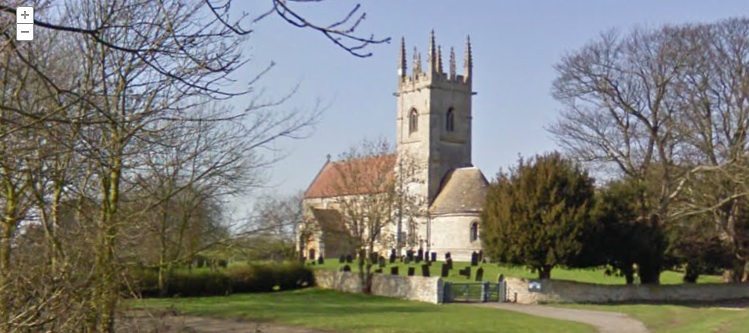
Somewhere in a quiet corner of England is St. Andrew’s church, standing as it has for a millennium or so. It's all that's left of the village of Sempringham where once upon a time an upper-class girl named Anne Dudley dipped into an Earl's library and began her love affair with books.

There was a manor house here once and it's driven me crazy, trying to find information on it. I just want to know: what did Anne see when she looked out a window? How many people could the Sempringham manor house accommodate? And concerning that cozy image that all of us interested in Anne Bradstreet have conjured up at one time or another -- young Anne curled up with a book in the Earl’s library -- was that library on the first floor or the second floor? Was it magnificent in its proportions, or small and cheerful? And so on.

I think its probable that the manor’s actual layout has slipped out of knowledge, unless a local
Lincolnshire history society comes through for me. So I settled on the easiest of the above questions to answer: what did Anne see when she looked out of a window? This area is described alternatively as flat, fenny, hilly and wooded by various sources. Perhaps I needed to go to England and see. Hmmm. As good an excuse as any. But that money issue . . .

Then I consulted a calendar and discovered it’s the 21st century. I hopped on to Google Map’s street view started driving all over Lincolnshire. Yes, folks, I drove almost to the
North Sea, all from the comfort of the big green chair in my living room. AND I drove on the correct side of the road, notwithstanding any local traffic regulations.

Now ain’t that a pretty town, above? That’s Billingsborough, between Pointon and Boston. I drove there last weekend. Note the dividing line is an annoying white instead of the correct yellow.

It took several tries to find the road that leads to the church (thank you, Google Map People, for driving down there), but I did at last.

And the answer to my question, “What did Anne see when she looked out of the window in 1628?"


She saw Iowa.

Unpave that road and take out the telephone poles -- and you’ve got it. Mostly flat, with some swells of land. Maybe there were some larger stands of trees and a few more sheep four hundred years ago, but it was mostly agricultural then -- and it’s mostly agricultural now. It looks like Iowa. So much for the romance of the past.


Tuesday, December 20, 2011

Seven Steps to Marital Bliss

As a seventeenth-century marriage counselor, William Gouge wasn't bad. Here's his seven points for maintaining peace at home. Notice that the husband and the wife are equally responsible for maintaining domestic harmony and that they have the same duties. Now, this sort of egalitarianism was not true of Gouge's counsel overall; at times he laid out specific roles for the husband and the wife based solely on their gender (like the importance of obedience in wives). But it's clear that a successful marriage was not simply the assertion of power by the husband over the wife.

As you read this, don't miss the preacher's use of catchy phrases. "The second blow makes the fray," "Wrath must not lie in bed with two such bed-fellows." I'd bet any number of groats that he used those in his sermons on many a Sunday.

Here is Mr. Gouge:

1. All offences so much as possibly may be must be avoided. The husband must be watchful over himself that he give no offence to his wife: and so the wife on the other side. Offences cause contentions.

2. When an offence is given by the one party, it must not be taken by the other; but rather passed by: and then will not peace be broken. The second blow makes the fray.

3. If both be incensed together, the fire is like to be the greater: with the greater speed therefore must they both labour to put it out. Wrath must not lie in bed with two such bed-fellows: neither may they part beds for wrath sake. That this fire may be the sooner quenched, they must both strive first to offer reconciliation. Theirs is the glory who do first begin, for they are most properly the blessed peacemakers. Not to accept peace when it is offered is more than heathenish: but when wrath is incensed, to seek atonement is the duty of a Christian, and a grace that cometh from above.

4. Children, servants, nor any other in the family must be bolstered up by the one against the other. The man's partaking with any of the house against his wife, or the wife against her husband, is an usual cause of contention betwixt man and wife.

5. They must forbear to twit one another in the teeth with the husbands or wives of other persons or with their own former husbands or wives [in case they have had any before]. Comparisons in this kind are very odious. They stir up much passion, and cause great contentions.

6. Above all they must take heed of rash and unjust jealousy, which is the bane of marriage, and greatest cause of discontent that can be given betwixt man and wife. Jealous persons are ready to pick quarrels, and to seek occasions of discord: they will take every word, look, action, and motion, in the worse part, and so take offence where none is given. When jealousy is once kindled, it is as a flaming fire that can hardly be put out. It maketh the party whom it possesseth implacable.

7. In all things that may stand with a good conscience they must endeavour to please one another: and either of them suffer their own will to be crossed, rather than discontent to be given to the other. S. Paul noteth this as a common mutual duty belonging to them both, and expresseth their care thereof under a word that signifieth more than ordinary care, and implieth a dividing of the mind into divers thoughts, casting this way, and that way, and every way how to give best content.

Wednesday, September 28, 2011

Married and Puritan, Part 1

It seems funny to me now to think that when I started the Anne Bradstreet project, I didn't really want to get into gender issues. I knew that seventeenth-century puritans would have differing opinions than we moderns on the role of women, but I didn't want to focus on that. I just wanted to tell the puritan story through the lens of Anne Bradstreet. But, silly me; I chose Anne Bradstreet of all people, who offered a challenge to the gender roles of her day. Now, it was a muted challenge, but there it is, so I have to get into those pesky gender roles. Oh, well; it will make a better read if this ever becomes a book.

I've made a New Best Friend lately: William Gouge, a seventeenth-century preacher who wrote a long book called, Of Domesticall Duties. It's all about proper roles within the family: husband/wife, children/parents, masters/servants. It addresses issues like, what qualities make a good husband? How should a wife behave toward her husband? And so on. It was a blockbuster of the time; a sort of 1600s "Dr. Spock" book, I believe running through several editions. Mr. Gouge is nothing if not thorough; he goes point by point in laying out these relationships, and then takes on the "but what if" questions: But what if the husband is bad at business and the wife is really good at it -- can she step up and run the family business? He addresses hundreds of these "what if" scenarios.

Gouge is especially helpful in his counter-examples. For every instruction he gives a counter-example of how something should not be done. So for instance, after talking about how husbands should speak gently to their wives, he might say, the contrary example is that of many husbands, who rant and rave at their wives -- etc. And then historians like me can say, aha, the norm ("many husbands", says Gouge) was for husbands to yell at their wives.

So what is his advice in the marriage relationship? What advice would Anne have gotten as a young bride? By what standard was she expected to conduct herself? What messages would have been coming from the pulpit? Well, let's say off the bat that we are in the seventeenth century, and we must be in touch with that and not be shocked by that. Women are expected to obey their husbands, and husbands to rule over them. Oh, yes, I hear you moaning, and I am not listening, because if you want to read about female equality you are in the wrong century. You must leave at once.

For the questions we need to address is not ones like, "How unequal were women to men?" Answer: very unequal. "How much worse was it to be a woman in the seventeenth century than the 21st?" From the viewpoint of legal and political status: much worse. "What kinds of careers could a woman pursue?" None, mostly. But we know all that and we've known it for a long time. If we're going to hang out in the seventeenth century, we have to get to know the people and find out how it all really worked.

Wives must obey husbands: granted. But was there any nuance in that? Any exceptions? Was it all black and white -- "Obey me, ignorant corrupt woman!" or were there shades of grey? As it turns out, there were shades of grey, plenty of them. Oh, women were hindered by a myriad cultural and legal barriers, but they were not slaves or serfs. Domesticall Duties makes it clear that there were cracks in the wall of discrimination because real life demanded it, but also because the Bible would not have it any other way. I will talk about those cracks next time.


Wednesday, September 7, 2011

Need a Bad Guy? Get a Puritan

I did a brief survey some time ago on historical fiction novels that feature puritans. The results were disappointing for someone who likes puritans: the majority of what's out there, it seems, is about witch trials. Well, it's a sexy topic, and a highly readable one. It hits a nerve in our society. There may have also been some novels featuring Anne Hutchinson, the woman who was put on trial for her non-orthodox beliefs and was thrown out of Massachusetts. But I was surprised that there did not seem to be any novels about early New England that did not trash the puritans.

I did pick up a romance called Wintercombe, set in the English Civil War -- and in England, not in America -- that I believe is on its way to featuring a love interest between a puritan woman and a royalist officer. They were on opposite sides of the fight, and are not getting along so well where I am in the story, so this should be pretty good. But in last night's read I was disappointed; the heroine, we learn, was abused by her horribly loveless puritan father, and has just decided that she is no puritan. This will clear the field for her attachment to the handsome officer . . . but I was hoping for a sympathetic portrayal of puritan life and spirituality, something in the way of how a nun's life was portrayed in the Dame Frevisse murder mysteries. No go.

I have often said to my students (jokingly, I thought) that I like the puritans because somebody has to. I guess I hit closer to the mark than I realized. Believe it or not, folks, they did not spend all of their time hassling heretics and burning witches. The faith they practiced, while often stern, was not barren of pleasure, comfort, or beauty.

The academic community "discovered" the puritans about eighty years ago, and a fair number of them wrote deeply and sensitively about them. That scholarly understanding apparently has made no impact at all on popular literature. It would be refreshing -- don't you think? -- to read a novel featuring puritans that showed them as something other than narrow and full of hate.

Saturday, September 3, 2011

Writing Pains, Part I

This post moves away from the puritans and onto the process of writing. After all, the goal is to write about Anne Bradstreet as well as research her life, though (historian that I am) I could spend the rest of my sentient life researching. Research is fun.

Writing is work. I decided this week to give myself a simple task: describe the countryside of 17th-century southern Lincolnshire, where the story opens. I thought I'd start with a sunrise. Simple enough, eh? It's dark -- the sun comes up -- it reveals the countryside that I want to talk about. And since the countryside is marshy and flat, I decided on a nasty rainy day as a background.

So after another delightful hour of research (did you know that the average temperature in Lincolnshire at the height of summer is only 70? Or that polecats live in forests and not marshes?) I set about my task. And that's when I ran into trouble.

How many ways can you say, "It was dark out?"

It was dark out
Darkness covered the land
Black night ruled over all
The darkness was so thick that it . . . something something
Dark night still covered every stone and pool
It's night, d#*@it!
And on and on

OK, so there's a lot of ways to say, "It was dark out." But I want to say it in some way that is actually fun to read, does not sound like every other "It was dark out" that has been written since Gilgamesh was a pup, and doesn't sound like I'm working way too hard ("Velveteen darkness like a hand of death lay suffocatingly" blah blah).

And that's the problem with describing a sunrise. It is so common, and it is so commonly described in literature of all kinds. There are no surprises for the reader when you're on about a sunrise. Now, what the light reveals might be a surprise, but my lucky readers would be getting a swamp with a noisy moorhen, and that's about it. No body in the pool. No shifty-eyed stranger or preternaturally lovely girl.

I suppose that makes it a fairly decent writing exercise. And the purpose was to fix the setting in my own mind, not write the Great American Paragraph. But I found that it is much easier to write something like this blog than it is to write a believable, interesting sunrise.


Thursday, June 9, 2011

Anne's "Feminism," Part IV

Last time I talked about how Anne expressed some counter-cultural ideas in her poetry, ideas about gender equality that might have been perceived as dangerous, and was not rebuked for them by her authoritarian community. Further, it appears that the men in her life, all prominent community leaders, conspired without her knowledge to get these published. And we have to ask: how did she escape censure?

I haven't really settled on a firm answer for this for myself, but here are some possibilities.

Her high rank and social status protected her. As Thomas Dudley's daughter and Simon Bradstreet's wife, she was the sort that the authorities -- the rest of the authorities, that is -- would think twice about lowering the boom upon.

She wasn't actually doing anything so radical. Maybe she "got away with it" because there was nothing she was really getting away with. Maybe the people of her time did not give a collective, loud gasp when she said hey, folks, women have talent, too. Likely women chiding men was acceptable sport in that day, just as it is in our day; or as those under authority these days chide those who have authority. You've all read "Dilbert" so you know what I'm talking about; we do what the boss-man says, but talk privately about just how pointy-haired s/he can be at times, and that is perfectly acceptable. In the seventeenth century, the lines of authority were much tighter, and something as disrespectful as "Dilbert" would never fly. But whenever we paint an era only in black and white, we get into trouble. English women had an inferior legal and social status at this time, but they were not slaves; they made their will known, and they pushed back.

I think this is the best explanation. It jives nicely with one of my "first principles" of historical interpretation: always assume first that what people in the past are doing is NOT radical or ground-breaking, even if it looks like it at first glance. Often we just don't understand the time or the motivations, and (more important) we have a cultural bias of our own that makes us identify everybody we can as a trailblazer or a radical because we just love superheroes so much. Personally, I don't think Anne had a radical bone in her body. She wasn't made to be a rebel. She may have been spunky or feisty, but rebellious? Not the way I read her.

I think too we need to remember she was not writing to make a public statement. Her poems were for herself and for those in her circle. She didn't plan on The World reading her stuff. And further, let's keep in mind that Englishmen were familiar with the idea that some women were exceptionally talented, the supreme example there being Queen Elizabeth.

The really good question in all of this is, why did her menfolk take such pains to get her work published? This is the part of the story that I will go ahead and say is -- okay -- radical. Sort of. (Thomas Dudley in a Superman suit -- if you knew the man, you'd realize how funny that is.) They would not have done it to bring fame to Anne, never to "get her out there" and "let her talent be seen." Puritans would have regarded such motivations as worldly arrogance and vanity. Instead, they must have seen her poetry as having some role in their life's work, which was to bring the Kingdom of God to earth, and as much as possible, to build a truly godly society in New England.

Hey, I really like that. A woman writing classical-esque poetry based on the science and philosophy of the day, the sort of poetry that usually only men wrote -- and these puritans saw that as, in its own way, having a role in their grand experiment of building a truly godly society. More food for thought in that, eh? But I'm going to leave this particular line of discussion and move on to something else next time.


Tuesday, May 24, 2011

Miss Colonial America, or Inner Beauty Only?


I have the fun job of deciding what Anne Bradstreet looked like. We have no likenesses of her. What do you think -- should I make her a beauty, or not -- and if not, what should characterize her appearance?

The only immediate family member of whom a portrait has survived is her father, Thomas Dudley, pictured here. He was a rigid and doctrinaire man, but that doesn't come out in this picture -- what do you think?

Nice hair on this fellow, hmm? It's hard to tell, but I think he's wearing it long and past his shoulders. Wigs for men had not come into fashion yet, so this was the real thing. I think Anne will definitely get his thick hair.

Tuesday, May 17, 2011

Welcome

Welcome to All Things Anne Bradstreet! This is my journey through researching the life and poetry of Anne Bradstreet and writing a historical novel about her life. I am in the very early stages of my project. I began seriously working on it in April 2011, and currently (May, 2011) am deep into the research stage. When some aspect of her life or poetry hits me -- when I can see her vividly in a situation, or when I get one of those (lovely) flashes of insight, then I try writing a scene for a book. One of these scenes has been quite successful; the rest, learning experiences.

Two things go into writing a historical novel: researching the thing, and writing the thing. I want to use this blog as a sounding board for both of those processes. I want to talk to you about what I learn about Anne and how I decide I want her to act and to be in my book. I hope you'll talk back and give me your insights and opinions on what I am on about.

I thought about using my Facebook friends as my sounding board and endlessly posting historical glory there. But that would not be fair to my FB friends who just don't like history, and maybe even too much for those who do. My family is already a sounding board of sorts, but peace in the home demands that I limit my Anne observations to far fewer than what actually occurs to me. Spouses don't always want to hear about a long-dead Puritan woman when they walk in the door at the end of the day, and teen-aged sons are even less tolerant. So my dear family, see how much I love you? I'm starting a blog.

Thanks for taking this journey with me.

-Joyce