Researching and writing about puritan poet Anne Bradstreet
Showing posts with label puritans. Show all posts

Friday, September 14, 2012

Writing Pains #3

In making window glass in the 17th century,
you'd get a "bull's eye" in your glass sheets,
which would be used for  your less prominent
windows.  Nicer windows were only slightly wavy.
Thanks to b3tarev3 for this photo.
Yesterday I went to a writers' group in Winnetka, about half an hour away.  The first hour was devoted to a presentation by an author on incorporating memory into stories, and the second a reading of a manuscript from one of the group's members.  And a fine manuscript it was!  I didn't go crawling out vowing to forsake my inferior writing, but it showed me that I have a long way to go yet.  Well, never mind; at least I'm voyaging, and I've not been at this for very long yet.

In the meantime, I'm making sure I've got Stuart England firmly in my own head before I take Anne across the ocean.  To that end I have learned this about nobleman's houses in the early 17th century:

Carpets went on tables as well as floors.  You'd cover the carpet with a tablecloth if the table was to be used for eating.

In the best rooms, walls were paneled.  Ceilings were often painted.

You would share a goblet or cup at a meal with the person you were seated next to.  After you drank, the cup was wiped out with a cloth and your companion drank.

Women as a whole experienced a lessening of status after Queen Elizabeth died.

Window glass is a very difficult subject to find out anything about.

And here's a sampling of questions that I have:

What happens to that fancy carpet on the table if you spill the wine?  I'm dubious about the carpet on the table during mealtimes thing; it sounds to me like an historian somewhere along the line got a little crazy with his conclusions.  Wouldn't you protect your expensive, irreplaceable carpet by removing it during the meal?  How easily would a stemmed goblet balance on all that fabric?  Still, if the tablecloth covering it were a fine wool, or silk, I suppose that would provide more protection than a cotton one.  Still.

If a married man was seated next to a single woman, would they share a cup?  Doesn't sound right.

Who was the head housekeeper?  Was it a chick or a dude?  What were the expected duties of a steward's wife?

How could you have a house without hallways?  Because they didn't; they had common rooms (like a parlor or a dining room), and then you'd enter private rooms directly from there.  The hallway less than a century away, I think, but  in 1630, except for a long "gallery" on one side or on  the back of the house, they didn't exist.  And it is most inconvenient for this writer to visualize what the top of the stairs looked like, and how you'd get to that room under the eaves on the far side of the house.

Sunday, June 3, 2012

What Happened to Roger Williams?

Roger Williams has undergone quite a transformation over the centuries:  from a purist who was too pure to worship in Massachusetts (which is how his neighbors saw him) to a backslidden Christian centuries ahead of his time, embracing post-modern liberal thought (which is how many of us see him).  I suppose it’s an understandable error; anyone in the 17th century who respected Indian cultures and championed freedom of conscience must have rejected the stern certitude of puritanism, right?

“The Bloody Tenent”, Williams’ attack on
religious persecution.
Turns out Williams was a thorough-going puritan, even a quite conservative puritan.  I’m reading this book that rightly charts his intellectual sources to be Reformed theology -- the same theology that his persecutors were working off of.  But Williams interpreted certain biblical concepts (most notably, the implications of the incarnation) in different ways and so came to very different conclusions.  So while the likes of John Cotton said that the incarnation implied that God wished to build society infused with Christian values (and from there justified mandatory church attendance), Williams argued that the incarnation implied that the Church was only spiritual and had no business forcing itself on the unwilling individual.

But Williams went further.  Once he got to Rhode Island, he formed (or helped to form) a Baptist church, which was more in line with his theology.  But he left that church as well.  Ultimately, he decided that no church currently in the world was a “true” church, and in fact that a "true" church in his time was not possible.  Reason?  The apostolic succession -- that is, the line of spiritually anointed leaders, from Christ to Peter and on down -- was broken in the Middle Ages.  Those whom Jesus had commissioned to be the church leaders and church planters had now vanished from the earth.  One could only wait until Christ returned to restart the apostolic succession before true churches would be possible again.

Huh.  Now I’ve heard wacky theology in my time, and I’ve found that the first question to ask is, what does the Wacky Theologian get out of it?  Does it justify something that s/he wants, like more power or more sex or what have you?  Or did something happen to that innovative thinker, something painful perhaps, and now a concept in her faith is difficult to live with, and so is discarded or reshaped so that it could be defanged?

What was it that made Williams reject organized religion (while remaining a thorough-going Calvinist), even when he could form his church to be anything he pleased?

How about his other beliefs?  What happened to Roger Williams that brought him to believe that Sunday worship was a sacrament meant only for true believing Christians, and that the presence of nonbelievers polluted it?  What pushed him toward the unheard-of opinion that Indians had rights to all the land in America?  Why was he willing to take a stand, to risk all and lose all, on those particular issues?

What happened to Roger Williams?  What events or series of events opened him up to considering his beliefs through such a different lens?  What opened his mind or wounded his heart, that made him bury his face in his hands, maybe, that day alone in the house, unable to handle the implications of  . . . and then his head came up, and he reached for his Bible . . . how did that verse read, exactly?  Could it mean -- that?

What happened to Roger Williams?

And was there a woman involved?

OK, sorry about that last one.  I’m sure that whatever happened to Williams was more than just love gone sour.  But we don’t know what happened to Roger Williams.  Yet surely there is a story there, and maybe a pretty interesting one, the story of this thing, this event, that  shoved his thinking in novel directions and kept it there for the rest of his life.

Perhaps some intrepid novelist will come around and offer a creative suggestion. I’ve got I, Roger Williams in the queue to read this summer -- I’ve no idea what that author’s take on Williams is.  I’m hoping that s/he will weave me a story that will showcase the many facets of Roger Williams and offer a plausible (and entertaining!) plot line for how he became who he was.


Tuesday, May 22, 2012

Roger Williams’ Banishment

No portrait of Williams exists. This hypothetical
sketch was done in 1936.  This is how I
imagine him.
It’s Roger-Williams-time at last:  the enigmatic puritan whose views on justice were hundreds of years ahead of his time, and who was banished for them; a man drunk on the vision of the glory of God, and who nearly destroyed the fledgling community in Massachusetts.

  I try to pursue my research for this story by letting Anne’s own experience guide the timeline -- so I  research various people and events as Anne would have encountered them.  I should have turned to Williams before this, actually -- he was at Sempringham in the spring of 1629 --  but my Inner Historian has been kicking up a fuss about turning him into a character in a novel (as opposed to the Complex Elusive Historical Figure that he was).  But the deed must be done.  So here goes.

The first stop in Williams’ transformation into a character in a book is of course historical studies.  I have three scholarly works on Williams.  Oddly, they are all slender volumes.  History books not known for being slender.  History books are usually thick, as historians always seem to have plenty to say about stuff that you never wondered about wondering about.  A “short” history work runs around 250 pages.  Typical length is around 400 pages.  None of the Williams’ books top 200 pages.

Part of this is lack of material:  we know very little about his growing-up years, not even the precise year he was born.  I suspect the other part is the complexity and foreign quality of his theology; for the newcomer to puritan New England, it’s just hard to make heads or tails of exactly what everyone was so upset about.  (This is true of the Anne Hutchinson affair as well.)

It’s even hard for us to figure out if was he a Good Guy or a Bad Guy.  Was his banishment from Massachusetts an injustice, or not?  The problem is that Williams was kind of a nut -- as visionaries and forward-thinkers often are -- and he is much easier to get along with from a distance of 400 years than he would be if he were in our own time, sitting on a local school board for instance.

Even history textbooks can’t decide if he was a good guy or a bad guy.  Here’s some samples from my shelf:

From Out of Many:  
     "Williams believed in religious tolerance and the separation of church and state” -- good guy!
     "He also preached that the colonists had no absolute right to Indian land but must bargain for it in good faith” -- good guy!
     "These were considered to be dangerous ideas” -- bad, dumb other Puritans . . . 
     "and in 1636 Williams was banished from the colony.  With a group of his followers, he purchased land from the Indians and founded the town of Providence.” -- good guy!

From Liberty, Equality, Power:  
     "Williams, who served briefly as Salem’s minister, was a Separatist  who refused to worship with anyone who did not explicity repudiate the Anglican Church.” Oooh, sounds pretty narrow  -- bad guy.
     "In 1636, after Williams challenged the king’s right as a Christian to grant Indian lands to anyone at all, the colony banished him.”  Um, the king’s right “as a Christian?"  What’s all that about?  (See, these poor undergrads get these hunks o’ history flung at them in some of these books -- you can tell there’s a lot to this story, and you get two sentences.)  But we’ll say good guy, because we like the Indians and we hate what happened to him.
    "He fled to Narragansett Bay with a few disciples and founded Providence.” -- anyone fleeing persecution has the sympathy of most Americans, so -- good guy.
     "He developed eloquent arguments for religious liberty and the complete separation of church and state.” -- good guy

America, a Narrative History: 
    “Williams' belief that a true church must include only those who had received God’s gift of grace led him eventually to the conclusion that no true church was possible, unless perhaps consisting of his wife and himself.” -- Aha.  Bad guy. Whack job.

Truth was, Boston in 1635 just wasn’t big enough to contain Roger Williams’ ideas, and Williams was temperamentally unable to work patiently to win people over to them.  The mighty tidal wave hit the immovable rock, with predictable results.  What most intrigues me about his story is, long after the shouting was over and he was gone, Williams maintained a friendly correspondence with one of his chief accusers, John Winthrop.  That fact alone, I think, says something about Williams’ appeal, even in his own time.  It makes me look forward to writing him.


Monday, May 14, 2012

Kick a Puritan, Hard

Were you one of those precocious tots who awed their parents and grammar-school classmates by learning to spell, “antidisestablishment- arianism?”  But what does it mean, ha ha?  It means being opposed to cutting off tax monies to a state church -- un-state-churching it, in other words, or in the proper terminology, “disestablishing” it.  An “established” church is one that has a favored status with the state and receives financial support from it.

One of the first things that the government of Boston, Massachusetts did after its founding in 1630 was to establish a church, and they did that by providing that the minister’s salary would come out of tax monies.  “Theocracy asserted itself at once,” sniffed a 20th-century editor of the town’s chronicles.

Anyone smart enough to be in his job should know better.  This was not the establishment of a “theocracy.”  Most of our 13 colonies had state churches.   They did not invent the practice, either.  The Anglican Church back home was (and still is) an established church.  The four colonies that did not have state churches (Pennsylvania, Rhode Island, Delaware, and Rhode Island) were bucking a centuries-old tide.  As it turned out, that tide turned out to be the tide of the future, so those four came out looking pretty good.

So why didn’t the above history expert realize this?  Maybe he just goofed up . . . or maybe it was that the Puritans present such a tempting target for all things unAmerican.  When the subject is the Puritans, then providing for the minister can only mean theocracy, the rule by a narrow ministerial class over and against the wishes of the people.

The Puritans get that a lot, and I think the reason for it (in America, anyhow) is the Salem witch trials.  That was such a horrendous event that the rest of New England history is read, backwards and forwards, in its light.

Yet most of New England legal and social practices were pretty much in line with their century, Salem witch trials excepted.  It was a violent era, and an unfree one, wherever you were.  Freedom of worship was unknown in all the colonies except rogue Rhode Island; even Pennsylvania required a belief in God amongst its colonists.  And the story is never as black-and-white as we’d like to make it; for instance, even as they established tax-based churches, Massachusetts also banned ministers from holding public office, because they themselves had had a very bad experience at the hands of politically empowered church officials back home.

New England law is another example.  How likely would it be for you to get a fair trial in New England, would you say?  I bet most Americans assume that New England law was pretty much just a parade of of ear croppings, public whippings, and burnings at the stake for any and every cause.  Not so.  This is a huge and interesting topic which, unfortunately, I don’t have space for here.  But consider the conclusion of legal historian William Nelson.  Dr. Nelson compared Massachusetts law with that of neighboring Virginia and found that while in Virginia the law definitively empowered the economic elite,  “[Massachusetts legal practices] prevented those wielding political, economic, or social power from pressing their advantage and exploiting those under their control to whatever limits the market would permit.”

Maybe the Puritans get such a bad shake because we need bad guys to make sense of our national story.  Salem tarred them as the Ultimate Bad Guys.  So heck, let’s blame them for everything about ourselves as a nation that we can’t bear.  And  it won’t even matter if they’re not to blame, because they aren’t even really around anymore!  We can hate them and nobody gets hurt!

So are you grieved by our racist past?  The Puritans held African slaves.  Appalled by the abuses suffered by the Native Americans?  The Puritans  exiled the one person who said they should pay the Indians for that land.  Embarrassed by Prohibition?  The Puritans railed against drunkenness.  Angered at how human sexuality has been regarded as something dirty and shameful?  The Puritans whipped fornicators and declared adultery a capital crime, punishable by death.  Upset by environmental degradation?  The Puritans brought dandelions and garlic mustard to America and happily trashed their surroundings.  Uneasy about the direction that religious fundamentalism might take in our own generation?  Baby, look at them fundies frothing and fulminating in Massachusetts Bay!  How handy it is that we have a ready-made Source of All Evil in the American Past.

Everything in that above paragraph is true, and yet there is more to the story (as always) in each instance.  It is also a story worth exploring.


Citations:
 Winthrop’s Journals:  History of New England, 1630 - 1649, edited by Franklin Jameson (1908), pg. 52. Via google books.

Nelson, William E., The Common Law in Colonial America, Vol 1.  Oxford:  Oxford University Press, 2008, pg. 65.

Saturday, April 28, 2012

Sailing, Sailing O’er the Ocean Blue . . .

In any century, tall ships take one’s breath away.
I’m stuck learning stuff I really don’t want to have to learn (a sensation that my students are no doubt familiar with) now that Anne is leaving England via watercraft.  There’s a great lore around tall ships and a very picky vocabulary, and there’s nothing for it but to master at least the rudiments.  Sigh.

So for instance, if Anne is leaning over the railing looking at the water -- what’s that railing called?  That’s not the gunwale, is it?  I think “gunwale” would apply to the upper lip of a smaller craft.  I asked Dr. Google, who helpfully supplied me with many diagrams of ships, the different parts labelled, but none had the name of the railing thing.

It’s hard to track down the details that I need to know.  For instance, how do you get on a ship, in the 17th century?  A gangway, Love Boat-style?  Or do the passengers have to mount some sort of ladder affair?  I decided it had to be a gangway, and with as little description as possible (the less to err) I put one in.  I spent a couple of hours yesterday trawling the internet trying to track down the answer to that question, and I’ve got a couple of book titles to check as well, if I feel highly inspired down the road to figure it out.

And what about the sleeping arrangements?  The replica of the Mayflower has bunks for its passengers, but if that was so, I sure hope they had seat belts for those things.  Can you imagine being in a bunk when a storm hit?  A storm at sea was like a roller coaster.  British sailors were killed by being thrown out of their bunks until the British Navy switched to hammocks around 1600.  These were the deep hammocks, so you’re in a sort of cocoon when you’re inside them.  Even if the ship is pitching, you’re still secure, since the hammock would sway with the motion and the occupant would remain balanced.

My puritans had to be in hammocks.  Hammocks were safer and cheaper than bunks.  One of the chief drawbacks would be that you’d sleep cold in a hammock, and it was cold out at sea.  (If you’ve ever camped in cold weather and foolishly slept on an air mattress -- you know what a hammock on the ocean would be like.)  But you’d have some sort of padding in the bottom of your hammock (probably a straw-filled mattress) to help with that.

I was pleased to learn that the Arbella, Anne’s ship, was a large ship, stately even, with a cargo hold twice the size of the Mayflower’s.  She had an eagle on her prow and three masts.  Most of the people were housed belowdecks, on a middle deck that was above the hold.  Likely Anne was not there, though.  Some makeshift cabins were constructed on the main deck for the ladies of high rank.  Surely one of those ladies was Arbella Fiennes Clinton Johnson, daughter and sister of earls and wife of one of the most prominent colonists -- and for whom the boat was named.  Arbella’s family owned Sempringham, the manor where Anne spent so many years of her girlhood.  I would imagine that a few ladies housed with Arbella to wait on her (they brought England with them, at least at first).  The logical choices for that role would be Anne and her mother. I think men and women slept separately on this trip -- even married couples -- though I’m not sure.

The problem with these cabins was that if the Arbella’s guns had to be fired -- and she was bristling with weapons -- the cabins would have to be taken down or else they would be in the way of the gun sights.  (So these were cannons on the main deck, I suppose).  And that did happen, in the early days of the voyage.  Some of the women’s stuff was tossed in the sea so it would not be ignited by any flaming arrows that the enemy might send over.  Maybe the gentlewomen might have been better off living belowdecks; at least they would not have lost some of their blankets into the English Channel.


Wednesday, January 11, 2012

How I Drove to England


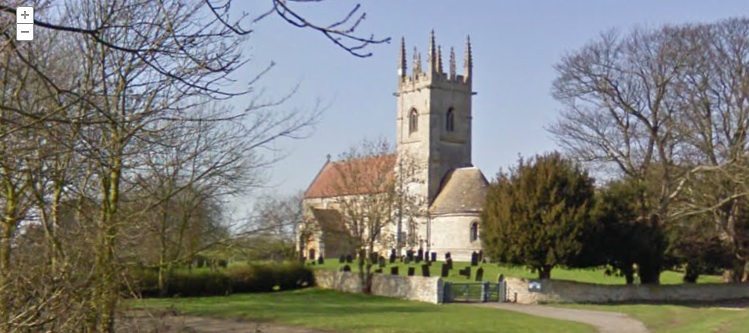
Somewhere in a quiet corner of England is St. Andrew’s church, standing as it has for a millennium or so. It's all that's left of the village of Sempringham where once upon a time an upper-class girl named Anne Dudley dipped into an Earl's library and began her love affair with books.

There was a manor house here once and it's driven me crazy, trying to find information on it. I just want to know: what did Anne see when she looked out a window? How many people could the Sempringham manor house accommodate? And concerning that cozy image that all of us interested in Anne Bradstreet have conjured up at one time or another -- young Anne curled up with a book in the Earl’s library -- was that library on the first floor or the second floor? Was it magnificent in its proportions, or small and cheerful? And so on.

I think its probable that the manor’s actual layout has slipped out of knowledge, unless a local
Lincolnshire history society comes through for me. So I settled on the easiest of the above questions to answer: what did Anne see when she looked out of a window? This area is described alternatively as flat, fenny, hilly and wooded by various sources. Perhaps I needed to go to England and see. Hmmm. As good an excuse as any. But that money issue . . .

Then I consulted a calendar and discovered it’s the 21st century. I hopped on to Google Map’s street view started driving all over Lincolnshire. Yes, folks, I drove almost to the
North Sea, all from the comfort of the big green chair in my living room. AND I drove on the correct side of the road, notwithstanding any local traffic regulations.

Now ain’t that a pretty town, above? That’s Billingsborough, between Pointon and Boston. I drove there last weekend. Note the dividing line is an annoying white instead of the correct yellow.

It took several tries to find the road that leads to the church (thank you, Google Map People, for driving down there), but I did at last.

And the answer to my question, “What did Anne see when she looked out of the window in 1628?"


She saw Iowa.

Unpave that road and take out the telephone poles -- and you’ve got it. Mostly flat, with some swells of land. Maybe there were some larger stands of trees and a few more sheep four hundred years ago, but it was mostly agricultural then -- and it’s mostly agricultural now. It looks like Iowa. So much for the romance of the past.


Tuesday, December 20, 2011

Sex: The First Requirement

Puritans loved logic and argument. Their greatest gift to the church may be in the realm systematic theology; they excelled at laying out the tenets of the faith in an orderly fashion, with all implications explored.

Dr. Gouge (whose manual, Domesticall Duties I've been reading) also took the systematic approach to the duties of married people. He begins with, "Who may seek to be married?" and after proving to the last breath that humans must marry only other humans (no going to the altar with Rover), he goes on to more relevant matters.

One of the first of Gouge's qualifications for marriage is they must be able, physically, to have sex.

More specifically: "They are to be accounted impotent and in that respect perform the essential duties of marriage, who . . . were born eunuchs from their mother's womb (Matt. 19:12); or by any accidental occasion are so made: as they are defective, or closed in their secret parts, or taken with an incurable palsy [paralysis]; or possessed with frigidity [lack of all sexual desire] . . . These ought not seek after marriage: for by those signs of impotency God sheweth that he calleth them to live single." (The bracketed comments above are mine.)

It appears that Gouge's definition of "impotence" could apply to men or women, depending on the situation, though I would guess it got a different name when dealing with a female problem. Gouge seems to be most concerned over a man or woman going into marriage knowing that sex was impossible because of a physical problem. When Puritans formed their experimental communities in New England, they made impotence a potential grounds for divorce.

So why was sex so important? First of all, impotence would frustrate one of the goals of marriage: having children.

So does that mean that if a woman could not conceive, she had failed in God's purpose and her husband might divorce her? Absolutely not. Infertility, or "barrenness" as it was known in that era, was completely different from impotence. For one thing, infertility could be discovered only after the marriage had been in place for at the very least some period of months, as opposed to the impotent person who presumably would know that s/he could not consummate the marriage even before the wedding night. So an impotent person was deceiving his or her spouse from the beginning.

Further, having children was not the only goal of marriage: "so inviolable is the marriage bond, that though it be made for children's sake, yet for want of children it may not be broken." And sometimes a woman who was barren for many years even would become -- un-barren. The Bible was full of stories of women who could not have children for many years, and then "her womb was opened."

But there was another matter, too: a barren woman could still love her husband physically -- could "yield due benevolence" [Gouge's euphemism for sex] -- and an "impotent" one could not. Gouge makes it clear throughout Domesticall Duties that part of the purpose of sex is to bring the husband and wife together for love and pleasure. Married couples should "mutually delight each in other, and maintain a pure and fervent love betwixt themselves, yielding that due benevolence one to another which is . . . ordained of God for this particular end."

It is also another gentle reminder to us that Puritans were not anti-sex. These people were not Victorians. They were Elizabethans (or nearly); very close to the age of Shakespeare. A Puritan teacher like Gouge might need to use euphemisms to talk about sex, but the topic was very much on the table for discussion, not hidden away or dismissed as dirty. In the seventeenth century even people who got a label like "puritan" were very clear on what helped make a happy marriage tick.

Seven Steps to Marital Bliss

As a seventeenth-century marriage counselor, William Gouge wasn't bad. Here's his seven points for maintaining peace at home. Notice that the husband and the wife are equally responsible for maintaining domestic harmony and that they have the same duties. Now, this sort of egalitarianism was not true of Gouge's counsel overall; at times he laid out specific roles for the husband and the wife based solely on their gender (like the importance of obedience in wives). But it's clear that a successful marriage was not simply the assertion of power by the husband over the wife.

As you read this, don't miss the preacher's use of catchy phrases. "The second blow makes the fray," "Wrath must not lie in bed with two such bed-fellows." I'd bet any number of groats that he used those in his sermons on many a Sunday.

Here is Mr. Gouge:

1. All offences so much as possibly may be must be avoided. The husband must be watchful over himself that he give no offence to his wife: and so the wife on the other side. Offences cause contentions.

2. When an offence is given by the one party, it must not be taken by the other; but rather passed by: and then will not peace be broken. The second blow makes the fray.

3. If both be incensed together, the fire is like to be the greater: with the greater speed therefore must they both labour to put it out. Wrath must not lie in bed with two such bed-fellows: neither may they part beds for wrath sake. That this fire may be the sooner quenched, they must both strive first to offer reconciliation. Theirs is the glory who do first begin, for they are most properly the blessed peacemakers. Not to accept peace when it is offered is more than heathenish: but when wrath is incensed, to seek atonement is the duty of a Christian, and a grace that cometh from above.

4. Children, servants, nor any other in the family must be bolstered up by the one against the other. The man's partaking with any of the house against his wife, or the wife against her husband, is an usual cause of contention betwixt man and wife.

5. They must forbear to twit one another in the teeth with the husbands or wives of other persons or with their own former husbands or wives [in case they have had any before]. Comparisons in this kind are very odious. They stir up much passion, and cause great contentions.

6. Above all they must take heed of rash and unjust jealousy, which is the bane of marriage, and greatest cause of discontent that can be given betwixt man and wife. Jealous persons are ready to pick quarrels, and to seek occasions of discord: they will take every word, look, action, and motion, in the worse part, and so take offence where none is given. When jealousy is once kindled, it is as a flaming fire that can hardly be put out. It maketh the party whom it possesseth implacable.

7. In all things that may stand with a good conscience they must endeavour to please one another: and either of them suffer their own will to be crossed, rather than discontent to be given to the other. S. Paul noteth this as a common mutual duty belonging to them both, and expresseth their care thereof under a word that signifieth more than ordinary care, and implieth a dividing of the mind into divers thoughts, casting this way, and that way, and every way how to give best content.

Wednesday, September 28, 2011

Married and Puritan, Part 1

It seems funny to me now to think that when I started the Anne Bradstreet project, I didn't really want to get into gender issues. I knew that seventeenth-century puritans would have differing opinions than we moderns on the role of women, but I didn't want to focus on that. I just wanted to tell the puritan story through the lens of Anne Bradstreet. But, silly me; I chose Anne Bradstreet of all people, who offered a challenge to the gender roles of her day. Now, it was a muted challenge, but there it is, so I have to get into those pesky gender roles. Oh, well; it will make a better read if this ever becomes a book.

I've made a New Best Friend lately: William Gouge, a seventeenth-century preacher who wrote a long book called, Of Domesticall Duties. It's all about proper roles within the family: husband/wife, children/parents, masters/servants. It addresses issues like, what qualities make a good husband? How should a wife behave toward her husband? And so on. It was a blockbuster of the time; a sort of 1600s "Dr. Spock" book, I believe running through several editions. Mr. Gouge is nothing if not thorough; he goes point by point in laying out these relationships, and then takes on the "but what if" questions: But what if the husband is bad at business and the wife is really good at it -- can she step up and run the family business? He addresses hundreds of these "what if" scenarios.

Gouge is especially helpful in his counter-examples. For every instruction he gives a counter-example of how something should not be done. So for instance, after talking about how husbands should speak gently to their wives, he might say, the contrary example is that of many husbands, who rant and rave at their wives -- etc. And then historians like me can say, aha, the norm ("many husbands", says Gouge) was for husbands to yell at their wives.

So what is his advice in the marriage relationship? What advice would Anne have gotten as a young bride? By what standard was she expected to conduct herself? What messages would have been coming from the pulpit? Well, let's say off the bat that we are in the seventeenth century, and we must be in touch with that and not be shocked by that. Women are expected to obey their husbands, and husbands to rule over them. Oh, yes, I hear you moaning, and I am not listening, because if you want to read about female equality you are in the wrong century. You must leave at once.

For the questions we need to address is not ones like, "How unequal were women to men?" Answer: very unequal. "How much worse was it to be a woman in the seventeenth century than the 21st?" From the viewpoint of legal and political status: much worse. "What kinds of careers could a woman pursue?" None, mostly. But we know all that and we've known it for a long time. If we're going to hang out in the seventeenth century, we have to get to know the people and find out how it all really worked.

Wives must obey husbands: granted. But was there any nuance in that? Any exceptions? Was it all black and white -- "Obey me, ignorant corrupt woman!" or were there shades of grey? As it turns out, there were shades of grey, plenty of them. Oh, women were hindered by a myriad cultural and legal barriers, but they were not slaves or serfs. Domesticall Duties makes it clear that there were cracks in the wall of discrimination because real life demanded it, but also because the Bible would not have it any other way. I will talk about those cracks next time.


Wednesday, September 7, 2011

Need a Bad Guy? Get a Puritan

I did a brief survey some time ago on historical fiction novels that feature puritans. The results were disappointing for someone who likes puritans: the majority of what's out there, it seems, is about witch trials. Well, it's a sexy topic, and a highly readable one. It hits a nerve in our society. There may have also been some novels featuring Anne Hutchinson, the woman who was put on trial for her non-orthodox beliefs and was thrown out of Massachusetts. But I was surprised that there did not seem to be any novels about early New England that did not trash the puritans.

I did pick up a romance called Wintercombe, set in the English Civil War -- and in England, not in America -- that I believe is on its way to featuring a love interest between a puritan woman and a royalist officer. They were on opposite sides of the fight, and are not getting along so well where I am in the story, so this should be pretty good. But in last night's read I was disappointed; the heroine, we learn, was abused by her horribly loveless puritan father, and has just decided that she is no puritan. This will clear the field for her attachment to the handsome officer . . . but I was hoping for a sympathetic portrayal of puritan life and spirituality, something in the way of how a nun's life was portrayed in the Dame Frevisse murder mysteries. No go.

I have often said to my students (jokingly, I thought) that I like the puritans because somebody has to. I guess I hit closer to the mark than I realized. Believe it or not, folks, they did not spend all of their time hassling heretics and burning witches. The faith they practiced, while often stern, was not barren of pleasure, comfort, or beauty.

The academic community "discovered" the puritans about eighty years ago, and a fair number of them wrote deeply and sensitively about them. That scholarly understanding apparently has made no impact at all on popular literature. It would be refreshing -- don't you think? -- to read a novel featuring puritans that showed them as something other than narrow and full of hate.

Wednesday, August 17, 2011

Puritan Democrats?

When a group of pioneers writes down charters and laws for their new government, they inadvertently set down for all time their understanding of human nature, of how society works, and of their own values. The New England puritans did the same thing when they set up shop (governmentally speaking) in 1630. Though they were still technically under the authority of the King of England, they didn't have any royal authorities tagging along with them on the voyage -- no surprise there, given how often colonies failed -- so they could run things pretty much as they pleased.

The government of Massachusetts Bay is often described as a "theocracy" -- literally, "rule by God," but practically, rule by the ministers, or rule according to religious standards. This is because only male church members could vote and hold office, and ministers were among the most influential men in the colony. But if we take another look at this system and judge it by seventeenth-century standards, another picture begins to emerge. Far from some kind of religious dictatorship, the puritans set up what was likely the most representative government in the world at that time.

We have to deal with some of our biases first. First of all, the male-only voting thing: women could not vote or hold office anywhere. They could not vote in England or in any of the colonies. So we don't want to hold the puritans to standards that did not yet exist by criticizing them for not enfranchising their women. But the suffrage picture in this era was even bleaker than that. In England (or anywhere), not even all men could vote or hold office. These were privileges, not rights. You had to attain to a certain standing in society -- usually, you had to own a certain amount of land or have a certain income -- in order to participate politically in society. This made perfect sense in a society that believed that government should come from the Best Men -- the men of superior social standing, or at the very least the ones who had shown they had the smarts and talent to succeed financially. No one believed in democracy, except maybe a few crackpots.

The puritans chose a different standard by which to determine who could hold political power. Ever distrustful of human nature, ever aware that anyone with political power could be tempted to use it corruptly, they put their trust in the place where God dwelled -- the hearts and minds of His chosen people. Christians, in other words. Church members. Could they be corrupted? Sure. Would some be? Of course. Puritans had no illusions about the potential darkness of the human heart. But it was the best of the available choices.

So how many men in Massachusetts Bay were church members? In those early years, almost all of them. They came to escape an aggressive king and maybe coming judgment from God on England, and passion for God was high. We don't know for sure, but likely over 80% of men who were of age were church members and therefore eligible to vote and hold office. This was a far higher percentage than back home in England, or in Virginia, their colonial neighbor to the south.

And those early puritan leaders did not have to do this. The charter on which they based their government -- the charter they got from the king, that they had to have before they could leave -- gave the ruling committee authority to retain the power in their own hands. They chose not to do so. Instead, they opened it up to everyone.

It was a smart move, as well. They were a long way from royal authority, and settlers always are more cooperative with the local strongmen if they have a stake in the system. Even worldly Virginia, which was motivated by profits and not Protestantism, found that out.

The puritans also kept a political rein on their ministers. If you were an ordained minister, you could not hold political office. Back in England, these people had suffered at the hands of bishops with political power who used it against them. That was not going to happen in New England.

We don't want to go too far with this line of reasoning and say, "And from thence sprang American democracy!" It sprang not from thence. The story is a little more complicated than that. The puritans were not democrats. They were themselves: ardent 17th-century Christians, seeking to live out the Bible, and struggling to determine how to do that on the template of laws and charters.

For the above insights I am indebted to Edmund Morgan's fine book, The Puritan Dilemma. And thank you, Dr. Breen, for assigning it way back in that colonial history class. As a brief, well-written history of the puritan migration, there is no better.


Saturday, August 13, 2011

How Pure Were the Puritans?

How pure did you have to be to be a puritan? Just how did they practice their faith?

I pointed out in my last post that "puritan" referred to their desire to "purify" the Anglican Church of all Catholic influence. It did not mean that they were ascetics or kill-joys. HL Mencken once defined puritanism as "the haunting fear that someone, somewhere, may be happy." No, no, no, people. Puritans definitely took a more serious view on life, but they -- well, they had their jolly side, too.

Take partying. Puritans loved good food and good drink. They were not teetotalers; Prohibition came via crusades in the nineteenth century, not the seventeenth. These guys were not Victorians -- they were Elizabethans (plus a generation) and had no ethical problems with tipping a mug. They lived in a hard-drinking age, too; the bar bills for events like weddings and even ordinations is impressive. Now, they were firmly opposed to drunkenness; that would bring you to the attention of the authorities. But drinking itself? It would not have occurred to a puritan to not drink.

It would have also been almost impossible to abstain, as well. Beer was the standard drink for all meals, for all members of the family, since the water was often contaminated. Rum was more of a man's drink, but everyone drank beer, even at breakfast. Coffee and tea did not make their appearance until around the 1660s.

But it was the food that they really loved. Puritans were always cautious about enjoying the pleasures of the world -- they knew how easily they could go from enjoyment to an excess that pulled their heart's devotion from God. But it seems that they worried less about the dangers of really enjoying food. Some of the most voluminous diarists of the New England puritans devoted pages to describing feasts. They observed days of fasting and prayer, but they also involved days of giving thanks -- and like our Thanksgiving, those days involved lots of food.

Now, if we picture a group of puritans at a party, with a plate in one hand and a rum punch in the other, can you really imagine they would be solemn and stern? Of course not; such things don't go together. I would guess that a puritan party never got to "raucous." Standards of behavior still applied. But was it fun? Did they laugh and relax? Sure.

Puritans were also huge supporters of marriage. It was the medieval Catholics, not the Protestant puritans, who glorified celibacy. Like all Protestants of their century; puritans defined themselves away from Catholics sharply on this subject. Marriage was ordained by God, they said; that is clear in the very first chapters of the Bible. It was meant to provide children, but it was also for the comfort and support of both husband and wife. Married sex was not simply for procreation; it was one of God's good gifts to humanity. Now, I suspect that even in the bounds of marriage, there were certain boundaries that puritan couples observed. But in affectionate, loving marriages -- and there were many of them in New England -- likely the bed was not cold.